


Off-Grid EV Charging Solutions for Construction Jobsites
As electric vehicles become more common across commercial fleets, construction operations, government agencies, and municipalities, organizations need reliable ways to charge vehicles wherever their work takes place.
For construction jobsites, remote projects, temporary facilities, and developing locations, that can be challenging. Many sites do not have enough electrical capacity to support EV charging, while others may still be waiting for permanent utility connections.
Off-grid EV charging provides an alternative by bringing power and charging capabilities directly to the site without relying entirely on permanent grid infrastructure.
By combining battery energy storage, renewable energy generation, and EV charging technology, off-grid systems can help organizations establish charging at locations where traditional infrastructure may be limited, unavailable, or still under development.
How Does Off-Grid EV Charging Work?
Off-grid EV charging uses an independent energy system to provide electricity for vehicle charging without depending entirely on an existing utility connection.
Battery energy storage plays an important role by storing electricity and making that power available when charging demand occurs. Renewable energy sources such as solar can also be incorporated into the system to generate additional power.
According to the Joint Office of Energy and Transportation, battery energy storage can help support EV charging deployment in areas with limited grid capacity, reduce peak electrical demand, and provide stored energy during grid disruptions or outages.
For organizations operating where electrical infrastructure is limited, battery-powered EV charging provides another option beyond waiting for high-capacity permanent utility service.
Where Can Off-Grid EV Charging Be Used?
Off-grid and battery-powered EV charging can be particularly useful when a project needs power before permanent electrical infrastructure is available.
Potential applications include:
- Construction and infrastructure projects
- Remote jobsites
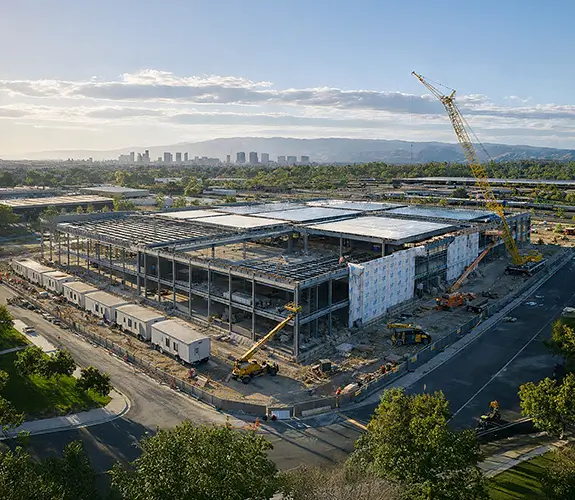
- Data center construction projects
- Government and municipal fleets
- Emergency response operations
- Industrial locations
- Temporary facilities
- Special events
- Locations awaiting permanent utility connections
These applications share a common challenge: the need to provide reliable charging or power in places where conventional electrical infrastructure may not yet be practical.
EV Charging for Construction Sites Without Grid Power
Construction projects often begin long before permanent utilities are fully available.
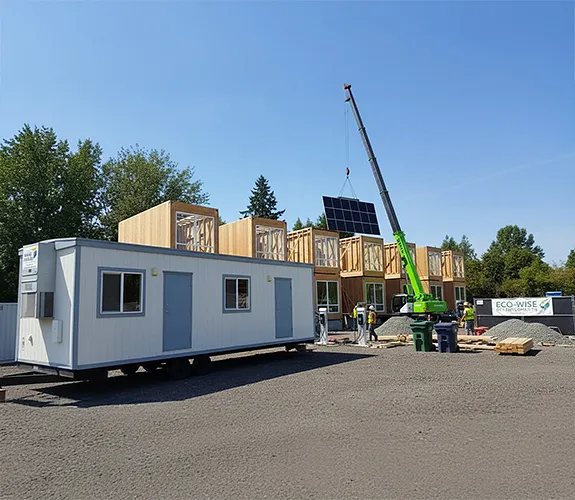
A new development may have crews, vehicles, temporary offices, and equipment operating onsite while transformers, electrical service, permitting, utility upgrades, or permanent connections are still being coordinated.
That can create a challenge as companies introduce electric vehicles and equipment into their operations.
Instead of waiting for the jobsite to connect to a permanent power source, off-grid EV charging allows the power source to be brought to the jobsite.
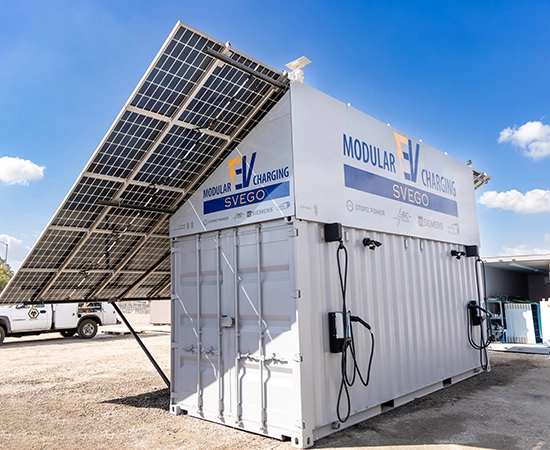
Mobile Modular's SVEGO solution is designed for applications with limited utility access and remote locations. The self-generating modular energy system combines energy storage, solar generation, EV charging capabilities, and remote monitoring in a scalable solution.
Bring EV Charging to Remote Jobsites
Traditional EV charging stations are typically installed where sufficient electrical infrastructure already exists or can be constructed.
Remote projects do not always have that option.
Infrastructure projects may operate miles from suitable electrical service. Temporary projects may not justify installing permanent charging infrastructure. Other projects may simply need charging sooner than utilities can be installed.
Off-grid EV charging can help organizations establish charging capabilities in these environments without making operations entirely dependent on permanent grid access.
This makes the approach particularly relevant for construction sites, remote infrastructure projects, industrial operations, and temporary facilities.
Support EV Charging While Permanent Utilities Are Being Installed
The timeline for a construction project and the timeline for electrical infrastructure do not always align.
Site development can move quickly, while permanent utility connections, transformers, electrical upgrades, permitting, and construction may require additional coordination.
Off-grid EV charging can help bridge that gap.
Organizations can establish EV charging earlier in a project's lifecycle while permanent electrical infrastructure is still being developed. As project requirements change, the system can potentially be relocated, expanded, or repurposed.
For construction companies, that flexibility can support the growing use of electric fleet vehicles and equipment without making EV operations entirely dependent on the availability of permanent utilities.
More Than EV Charging: Flexible Energy for Remote Operations
The value of off-grid energy is not limited to charging vehicles.
Battery-based energy systems can also become part of a broader strategy for supporting temporary and remote operations. Depending on the configuration and project requirements, stored and renewable energy can provide EV charging while helping organizations address power needs at locations without established electrical infrastructure.
That makes off-grid energy particularly relevant for organizations operating:
- Construction jobsites
- Remote facilities
- Fleet operations
- Emergency response locations
- Temporary commercial sites
- Developing infrastructure projects
Mobile Modular's SVEGO Off-Grid Energy Solution
Mobile Modular, in partnership with BC Energy, STORZ Power, and Siemens, offers SVEGO, a scalable, self-generating modular energy solution designed for remote locations and sites with limited power access.
Depending on project requirements, the SVEGO solution can include:
- Battery energy storage
- Solar arrays
- L2, L3, AC, or DC EV charging
- Standalone or scalable configurations
- Remote hotspot and Wi-Fi connectivity
- Real-time IoT cloud monitoring
- Enhanced security options
SVEGO is available nationwide for lease or purchase, providing organizations with flexibility based on project duration, location, and energy requirements.
Common Questions About Off-Grid EV Charging
Can EV chargers work without a connection to the electrical grid?
Off-grid EV charging systems can use stored energy and renewable generation to provide charging at locations where permanent grid infrastructure is limited or unavailable.
Can off-grid EV charging be used on construction sites?
Yes. Construction sites are one of the applications where off-grid charging can be useful, particularly when permanent electrical service has not yet been installed or does not provide enough capacity for charging needs.
What is the benefit of battery storage for EV charging?
Battery energy storage allows electricity to be stored and made available when charging demand occurs. It can provide additional flexibility at sites with limited electrical capacity and can support charging in locations where permanent utility infrastructure is still being developed.
Can off-grid EV charging systems be relocated?
For temporary or changing projects, scalable modular energy solutions can provide greater flexibility than permanent infrastructure. Depending on the system and project requirements, charging capabilities may be relocated, expanded, or repurposed as needs change.
Power EV Charging Where Your Project Needs It
The transition to electric vehicles involves more than installing charging stations. Organizations also have to determine where that electricity will come from, how quickly charging can be deployed, and whether the solution can adapt as project requirements change.
For construction sites, remote jobsites, temporary facilities, and rapidly developing locations, off-grid battery EV charging can provide an alternative to waiting for permanent electrical infrastructure.
Mobile Modular's SVEGO solution brings battery storage, renewable energy generation, and EV charging together in a scalable modular system designed to provide power where projects need it.